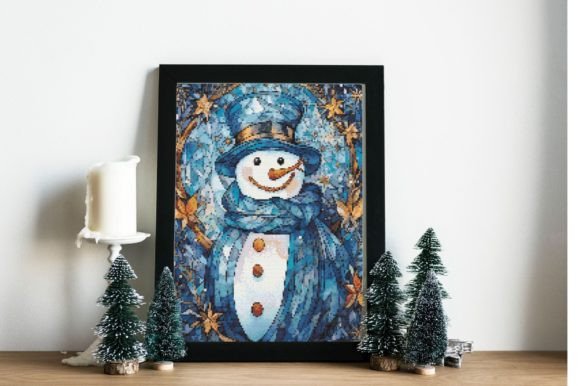
Counted Cross Stitch Pattern Snowman: Merch Review
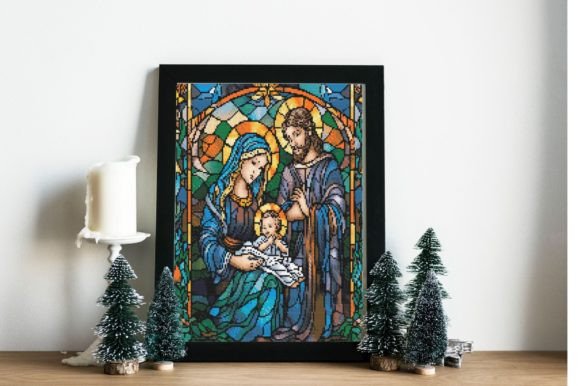
As a professional embroidery designer specializing in commercial branding and small business merchandise, I approach every new graphic asset with a critical eye for production viability. When evaluating the Counted Cross Stitch Pattern Snowman for potential use in branded patches, staff uniforms, or boutique merchandise, my primary focus is not just on aesthetic charm, but on how well the design translates from a digital concept to a tangible, durable product. While the associated metadata references a "Stained Glass Church in Winter Art," this review focuses specifically on the snowman motif as a standalone asset for seasonal business branding, analyzing its performance across various commercial applications.
First Impressions: Visual Personality and Brand Alignment
The initial impression of the Counted Cross Stitch Pattern Snowman is one of nostalgic warmth and approachable craftsmanship. For small business owners, particularly those in the bakery, florist, pet brand, or handmade gift sectors, this visual tone is invaluable. Unlike sleek, corporate vector logos, a cross-stitch aesthetic communicates "handmade," "local," and "thoughtful." This specific design feels friendly and rustic rather than overly polished or modern, making it an excellent candidate for businesses that want to emphasize artisanal quality over industrial efficiency.
However, from a digitizing perspective, the pixelated nature inherent to Cross Stitch Patterns presents unique challenges and opportunities. The blocky structure creates a distinct texture that mimics traditional needlework, which can add significant perceived value to a finished product. Yet, this same structure requires careful evaluation to ensure it does not look like low-resolution clip art when scaled up for a tote bag or down for a cap. The design’s success in a commercial setting depends entirely on respecting its grid-based origin while optimizing it for modern machine embroidery.
Commercial Applications: From Patches to Packaging
In real-world business scenarios, the Counted Cross Stitch Pattern Snowman shows immense versatility for seasonal small business merch. Here is how I evaluate its performance across different product categories:
- Embroidered Patch Production: This is perhaps the strongest use case. The defined edges and solid fill areas typical of snowman cross-stitch designs translate beautifully into merrowed-edge patches. These can be used as limited-edition collectibles, loyalty rewards, or staff uniform accents during the winter season.
- Apron Embroidery: For cafés and bakeries, placing this design on the chest or pocket area of a canvas apron adds a festive touch without overwhelming the functional garment. The design serves as a conversation starter with customers, reinforcing the shop's cozy atmosphere.
- Tote Bag Design: On natural cotton canvas totes, the cross-stitch aesthetic complements the fabric texture perfectly. It transforms a generic promotional bag into a keepsake item that customers are more likely to reuse, extending your brand visibility.
- Product Packaging Accents: Beyond apparel, this graphic works exceptionally well as a branding element on hang tags, belly bands, or tissue paper stamps for Etsy sellers. It signals to the buyer that the contents were curated with care.
Technical Constraints and Production Warnings
While the charm of the Counted Cross Stitch Pattern Snowman is evident, business owners must exercise caution regarding where and how it is applied. Not all merchandise is suitable for this specific style of Graphics.
Size and Detail Limitations
Cross stitch relies on a grid. When reducing this design for cap embroidery or small sleeve cuffs, you risk losing definition. If the snowman’s facial features or buttons become too small, they may turn into indistinguishable blobs of thread. I strongly advise against using this design on curved surfaces like caps unless it has been professionally redigitized to simplify details. Similarly, tiny lettering integrated into the pattern often fails in production; text should be kept separate or omitted entirely at small scales.
Fabric Texture and Stabilizer Requirements
The geometric precision required for a cross-stitch look demands a stable foundation. Using this machine embroidery design on stretchy knits, fleece, or highly textured fabrics without adequate support will result in misaligned stitches that ruin the intended pixel-art effect. A firm cut-away stabilizer is non-negotiable for apparel. For items requiring frequent washing, such as staff uniforms or café aprons, ensure the stitch density is sufficient to prevent gaps after laundering, but not so dense that it causes fabric puckering.
Color Contrast on Dark Uniforms
Snowmen are traditionally white, which poses a visibility challenge on dark navy or black work shirts. Simply stitching white thread on black fabric can sometimes cause the white to appear gray or dingy due to shadowing. Consider adding a subtle outline or increasing the underlay to make the design pop against dark backgrounds. Always verify thread colors against the actual uniform fabric before committing to a bulk order.
Impact on Brand Identity and Customer Trust
Integrating the Counted Cross Stitch Pattern Snowman into your brand identity does more than decorate a product; it signals specific values to your customer base. In an era of mass production, visible stitch textures and folk-art aesthetics communicate authenticity. For an Etsy seller or local boutique, this alignment between visual style and business ethos builds trust. Customers perceive custom apparel featuring this type of detailed, textured art as higher value than standard screen-printed alternatives.
Furthermore, consistency is key. If your business already uses clean, minimalist sans-serif branding, introducing a rustic cross-stitch snowman might create visual dissonance. However, if your brand leans into cottagecore, vintage, or handmade aesthetics, this design reinforces your niche. It acts as a seasonal anchor that ties your physical products to your digital presence, especially when used in printable mockup marketing materials on social media.
Professional Designer Notes for Implementation
Before sending the Counted Cross Stitch Pattern Snowman to production, follow this professional checklist to ensure commercial success:
- Verify Commercial Licensing: Confirm that the specific digital embroidery file or pattern source allows for commercial use on merchandise. Personal-use licenses do not cover selling branded goods.
- Test in Black and White: Run a grayscale simulation or test stitch-out to check contrast and detail clarity without relying on color differentiation. If the design reads poorly in monochrome, it needs adjustment.
- Check Hoop Size Compatibility: Ensure the design dimensions fit within your machine’s maximum hoop size without requiring excessive repositioning, which increases error risk in batch production.
- Create Client Mockups: Before stitching 50 aprons, generate a realistic digital mockup showing the snowman on the actual garment color. Get client approval on placement and scale first.
- Compare Beside Other Assets: Place the snowman next to your existing logo and typography. Ensure the visual weight balances correctly so neither element overpowers the other.
- Validate File Specifications: Since product descriptions can sometimes be mismatched (referencing stained glass vs. snowman), always open the actual embroidery file to confirm stitch count, format compatibility, and color palette before purchasing or downloading.
The Counted Cross Stitch Pattern Snowman offers a unique opportunity for small businesses to leverage seasonal nostalgia in a way that feels genuine and high-quality. By treating it as a technical production asset rather than just a cute picture, and by respecting the limitations of stitch-based media, you can create merchandise that delights customers and strengthens your brand’s reputation for quality craftsmanship. Whether used as a signature patch on a barista’s apron or a charming accent on holiday packaging, this design succeeds when executed with professional intentionality.