Stained Glass Holy Family Cross Stitch Review
When evaluating digital assets for a craft business or personal collection, the transition from screen to fabric is where the true test lies. As a designer who regularly reviews embroidery files and cross stitch patterns for commercial viability, I approach the Stained Glass Holy Family Cross Stitch with a critical eye toward real-world application. This isn't just about how pretty the graphic looks in a listing photo; it is about whether this design can withstand the rigors of stitching, washing, and customer scrutiny when transformed into a finished product.
First Impressions: Mood and Visual Weight
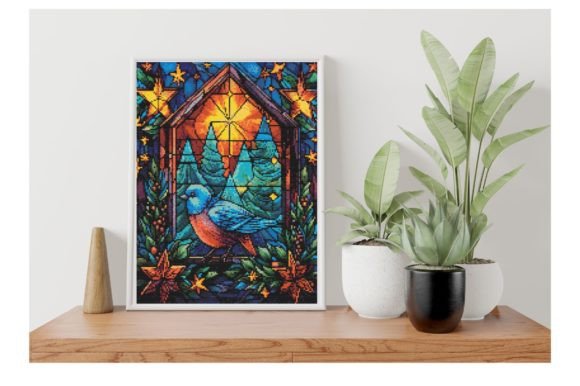
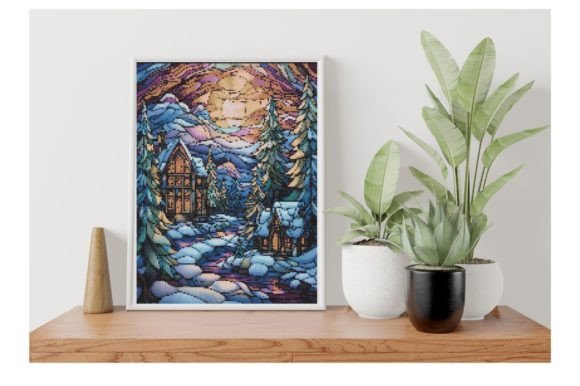
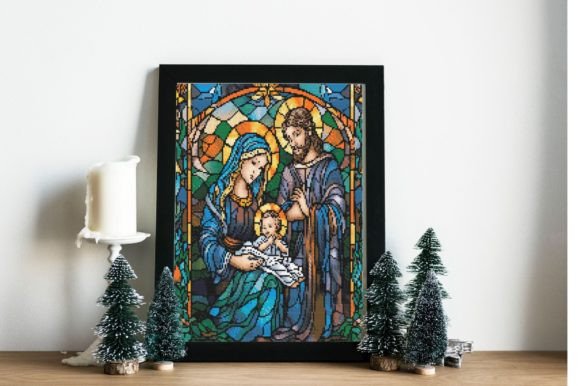
My initial assessment of this stained glass church in winter art pattern focuses on its visual personality. Stained glass motifs are inherently complex because they rely on high contrast and distinct color separation to mimic leaded glass. In this design, the Holy Family theme adds a layer of solemnity and tradition that demands respect in execution. The layout feels balanced, suggesting it would serve as a strong focal point rather than a background element.
For an Etsy seller or boutique owner, this mood translates directly to perceived value. Customers looking for holiday embroidery or religious gifts are often seeking emotional resonance. The "magical winter wonderland" description promises atmosphere, but as a maker, I am looking at line clarity. Does the design have enough negative space to prevent muddiness? From what I can see, the segmentation of colors appears intentional, which is crucial for maintaining definition when converting graphics into thread.
Real-World Application: The Holiday Tote Bag Test
To truly judge this design, I mentally place it into a specific production scenario. Let’s imagine preparing a custom embroidered tote bag for a holiday market. A tote bag is a fantastic canvas for counted cross stitch patterns because the fabric texture usually complements the grid-based aesthetic. However, this is also where practical challenges arise.
If I were stitching this for a client, my primary concern would be scale. Stained glass designs require sufficient size to keep the color blocks distinct. If scaled down too small for a pocket-sized accent, the intricate details of the Holy Family figures could merge, losing the recognizable forms that make the design special. For a standard 15x16 inch tote, centering this design at approximately 4x6 inches would likely preserve the integrity of the image while leaving adequate margin for seam allowances and handling.
I also consider the end-user experience. A tote bag gets thrown in cars, washed frequently, and exposed to sunlight. While cross stitch is durable, the high color count typical of stained glass art means more thread changes and potential tension points. I would advise using a high-quality cotton floss with good colorfastness ratings to ensure the vibrant "glass" effect doesn't fade after a few wash cycles. This attention to material quality is what separates a professional handmade product from a hobbyist experiment.
Fabric Compatibility and Technical Constraints
Not every surface welcomes detailed embroidery. When working with a design as visually dense as a stained glass window, fabric choice dictates success. Here is my technical breakdown for using this pattern across different mediums:
- Aida and Evenweave: These are the natural homes for this pattern. The grid structure supports the geometric nature of stained glass perfectly. Ensure your fabric count matches the design complexity; higher counts (like 28-count evenweave) will yield a more refined, less pixelated look suitable for framing or heirloom baby embroidery.
- Sweatshirts and Apparel: Proceed with caution. Knits stretch, and stained glass designs often have rigid vertical lines. If adapting this for sweatshirt embroidery, you must use a heavy-duty cut-away stabilizer to prevent distortion. The design may need slight modification to reduce stitch density if the original file is too heavy for knit fabric.
- Tea Towels and Linens: Excellent candidates, provided the fabric is opaque. Stained glass relies on light passing through color; on fabric, we simulate this with saturation. On thin white linen, dark threads might show through from the back. Always test on a scrap or use a lining fabric to maintain a clean presentation.
- Dark Fabrics: Traditional stained glass glows against light. On navy or black fabric, the design loses its luminosity unless you incorporate metallic threads or lighter outline stitches to define the "lead" lines. Without this adaptation, the Holy Family figures may disappear into the background.
Commercial Viability for Makers and Sellers
For creative entrepreneurs and digital product sellers, understanding the commercial potential of this asset is key. This design sits comfortably in the niche of traditional holiday decor and religious gifts, a category with consistent year-round demand that peaks seasonally.
However, professionalism requires due diligence. Before listing any finished product featuring this design, verify the licensing terms. Can you sell the physical embroidered item? Are you permitted to use the digital embroidery file for mass production? Clarifying these rights protects your shop from infringement issues. Additionally, if you are selling the printable cross stitch pattern itself, ensure your mockups accurately represent the final stitch-out. Misleading previews destroy buyer trust faster than poor stitching.
From a branding perspective, this design signals a classic, timeless aesthetic. It pairs well with other traditional holiday graphics but might clash with modern minimalist collections. Consistency in your shop's visual identity helps customers recognize your brand. If your shop specializes in contemporary abstract art, this specific Holy Family piece might feel out of place unless positioned as a special seasonal release.
Designer Notes: Ensuring Stitch-Out Success
Experience has taught me that hope is not a strategy. Whether you are a hobbyist making a personalized gift or a business owner fulfilling orders, follow these practical steps before committing to the final project:
- Test Stitch on Scrap: Never assume a digital preview equals reality. Stitch a sample on the exact fabric and stabilizer combination you plan to use. Check for registration errors between color blocks.
- Evaluate Thread Contrast: Print a black-and-white version of the pattern. If the values look gray and indistinguishable without color, the design lacks necessary contrast. You may need to adjust thread colors to ensure the Holy Family stands out clearly against the church background.
- Check Hoop Size Requirements: Confirm the dimensions fit your machine’s hoop capabilities without excessive re-hooping. Re-hooping increases the risk of misalignment, which is fatal for geometric stained glass designs.
- Review Stabilizer Strategy: For woven fabrics, tear-away may suffice. For anything with stretch or texture, cut-away is non-negotiable. The stability of the base prevents the "glass panes" from warping.
- Inspect Small Details: Zoom in on the faces and hands of the figures. At smaller sizes, these details often become unrecognizable blobs. If the detail is lost at your desired size, choose a larger application or select a simpler design.
Final Thoughts on Value and Presentation
The Stained Glass Holy Family Cross Stitch offers significant potential for creating meaningful, high-value items. Its strength lies in its ability to evoke nostalgia and reverence, making it ideal for christening gifts, wedding presents, and heritage holiday decor. However, its complexity demands respect from the maker.
Success with this design comes down to honoring the relationship between the graphic and the medium. By carefully selecting appropriate fabrics, testing thoroughly, and presenting the finished work with professional care, you transform a simple digital file into a cherished tangible object. Whether for your own mantle or your Etsy shop's bestseller list, treating this pattern with technical precision ensures the final result shines as brightly as the stained glass it emulates.