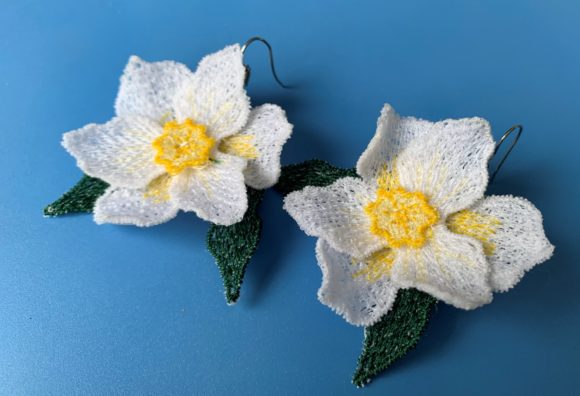
FSL Daffodil Earrings: A Craft Fair Review
As I prepare my booth inventory for the upcoming spring craft fair season, I am constantly evaluating which designs will translate best from a digital screen to a tangible, sellable product. When reviewing the FSL Daffodil Earrings machine embroidery design, my immediate impression is one of delicate elegance and seasonal freshness. This is not merely a graphic; it is a structural accessory. The description highlights that this 3D daffodil earrings design consists of lower petals, upper petals, a flower center, and two leaves. As a freestanding lace (FSL) project, it promises a lightweight, airy aesthetic that feels premium rather than mass-produced. For handmade shop owners and boutique makers, this design signals "spring" instantly, offering a soft, feminine appeal that contrasts beautifully with the heavier textiles often found at market tables.
Evaluating Market Viability for Accessories
In the context of a busy craft fair booth filled with embroidered tote bags, aprons, tea towels, and pillow covers, small accessories must fight for attention. The FSL Daffodil Earrings succeed because they offer a distinct category break. While customers may browse past racks of kitchen linens, a display of 3D floral jewelry acts as a visual palate cleanser. For Etsy sellers and creative entrepreneurs, this design serves as an excellent low-cost entry point for new customers. Unlike a large tote bag design or complex apron embroidery, these earrings are an impulse buy that showcases high-quality craftsmanship without requiring a significant financial commitment from the buyer.
However, practical selling points matter as much as aesthetics. Because this is a freestanding lace design, the finished product has texture and depth that photographs exceptionally well for online listings. The separation of lower and upper petals creates natural shadows and highlights, making the digital embroidery file easier to market through printable mockups or lifestyle photography. For commercial embroidery businesses, this design is highly repeatable. Once you have dialed in your stabilizer and thread tension, you can batch-produce dozens of pairs in a single hooping session, maximizing your profit margin per hour compared to larger, single-placement items.
Production Realities and Technical Considerations
While the FSL Daffodil Earrings are visually stunning, they demand respect during production. Freestanding lace is unforgiving of errors. As an experienced designer, I must emphasize that stitch density is the most critical variable here. If the design is too dense, the earrings will be stiff and heavy; if too loose, they will lack structural integrity and may fray after wear. Before listing this as a craft fair product or adding it to your small shop product lineup, you must verify the digitizing quality. Check the connection points between the flower center and the petals. In FSL, these bridges are where failures occur. A broken connection during the final trim step ruins the entire piece.
Careful use notes are essential for this specific embroidery file. Although the description mentions two leaves, consider how those leaves attach to the main flower body. Small details like leaf stems or petal veins can get lost if resized incorrectly. Never assume a digital embroidery file is perfectly scalable for FSL. Resizing can distort stitch angles and compromise the self-supporting nature of the lace. Additionally, pay close attention to fabric texture and stabilizer choice. Even though this is freestanding, the base stabilizer determines the final hand-feel. Water-soluble stabilizers vary by brand and weight; testing on scrap material is non-negotiable to ensure the daffodils are crisp yet comfortable against the skin.
Strategic Display and Merchandising Tips
To maximize buyer engagement at a weekend market, presentation is everything. Do not lay these flat on a tablecloth. The 3D nature of the FSL Daffodil Earrings requires vertical display to show off the layered petals. Use earring cards that allow the flower to hang freely, demonstrating the movement and lightness of the lace. For handmade product sellers, pairing these earrings with other spring-themed items creates a cohesive brand story. Imagine a display featuring a pastel linen tea towel embroidery sample next to a carded pair of daffodil earrings. This cross-merchandising encourages customers to build a gift set, increasing the average transaction value.
For digital sellers offering the embroidery file itself, transparency builds trust. Clearly state the recommended hoop size, stabilizer type, and thread colors in your listing. Buyers need to know if their machine can handle the field size and if the design includes necessary jump stitch trims. Providing a real mockup photo of the finished product, rather than just a software render, significantly boosts conversion rates. It proves that the design has been test-stitched and verified. Remember to confirm commercial licensing terms before selling finished products. While the prompt notes "FSL free," always verify if this applies to personal use only or if it permits selling physical items at craft fairs and on platforms like Etsy.
Designer Notes for Consistent Quality
Achieving a premium look with FSL Daffodil Earrings requires meticulous attention to detail. Here are my professional recommendations for ensuring your finished product meets customer expectations:
- Test Stitch Every Batch: Humidity and temperature affect water-soluble stabilizer performance. Always run a test stitch when setting up for a production run, even if you have used the design before.
- Thread Contrast Matters: Since this is a 3D design, using variegated threads or slightly different shades for the lower and upper petals enhances the dimensional effect. Solid yellow can sometimes look flat in FSL; subtle tonal shifts add perceived value.
- Inspect Stitch Density: Hold the finished earring up to the light. You should see a consistent mesh without gaps or overly thick clumps. Adjust your machine tension if the bobbin thread is visible on top.
- Verify Hoop Size: Ensure you are using the smallest appropriate hoop size for the design. Excess stabilizer in a large hoop can shift during stitching, causing registration issues with the multi-part petal layers.
- Check Hardware Compatibility: The flower center must accommodate earring hooks securely. Test your chosen hardware with the finished lace to ensure the hole placement aligns correctly and the weight distribution prevents the earring from flipping forward.
- Create Physical Samples: Before committing to a full craft fair inventory, make at least three perfect samples. Wear them yourself to test durability. Customer feedback on comfort and longevity is invaluable for refining your production process.
Final Verdict for Creative Entrepreneurs
The FSL Daffodil Earrings represent a high-potential addition to any spring embroidery lineup. They bridge the gap between traditional needlework and modern wearable art, appealing to customers seeking unique, handmade accessories. For the Etsy seller or boutique maker, they offer a profitable niche item that differentiates your brand from generic competitors. However, success lies in execution. Treat this machine embroidery design with the technical rigor it demands. Validate your stabilizer, perfect your tension, and present the finished product with the elegance it deserves. When produced correctly, these daffodils are not just stitches; they are a celebration of spring that customers will be eager to wear and gift. By focusing on quality construction and strategic merchandising, you transform a simple digital file into a standout craft fair bestseller that reinforces your reputation for excellence in handmade embroidery.